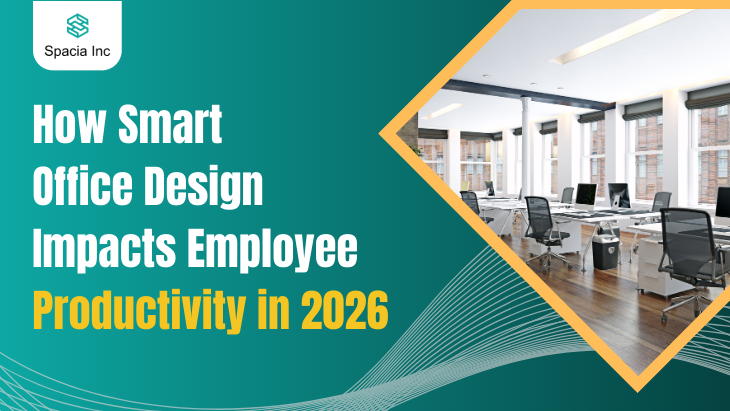



The contemporary workplace has evolved a lot in recent years. Office desgin no longer exist as places where workers sit at their desks working eight hours a day. They are smart, adaptable settings that are capable of sustaining well-being, teamwork and output. Office design has become a major factor in employee productivity as employees are competing to ensure their organizations have the talent and efficiency to succeed.
Smart office design is the integration of intelligent spatial planning, technology and humanistic values to achieve work environments that are responsive to the real work behaviors of people. Interior Design the improvement in concentration, involvement and overall productivity is becoming tangible in organizations which invest in smart offices in 2026.
The Future of the Office in 2026
Working together is a reality and not an exception anymore. Workers alternate between home and work, and this implies that the physical workplace should have value added on to it other than the remote working one does. Offices are now designed to foster the spirit of teamwork, creativity and intense concentration – depending on the work to be done.
Smart office design in 2026 aims at flexibility, customisation and decision-making based on data. Sensors, AI tools and employee feedback allow the organisations to constantly improve their workspaces in order to suit the changing needs.
Adaptable designs that suit work styles
Flexible layouts are one of the most important advantages of smart office design to enhance productivity. It is no longer the case that employees are doing the same kind of work all day. There are activities that one needs to be focused on and those that must involve teamwork and brainstorming.
Modern offices now include:
* Quiet zones for deep focus
* Open discussion areas among team members.
* Unofficial socializing areas to talk fast.
* Virtual meeting phone booths and pods.
This flexibility minimizes distractions and gives the employees a chance to select the environment that facilitates the task at hand. Whenever individuals have an opportunity to work in areas that they are comfortable doing, they deliver higher quality and better results at a speed that is faster.
Friction-Reducing Smart Technology
The technology is also integrated into the design of an office in 2026. Smart offices will remove minor daily disappointments that tend to empty pockets. Automated services are applied to the lights, temperature, bookings, and desk availability.
Smart technology can include:
* Space-optimizing occupancy sensors.
* Intelligent lighting, which changes depending on the natural light and time of day.
* Smart meeting room scheduling.
* No-contact access and controls.
The employees will be able to spend time on valuable work rather than operational hassles due to the reduction of interruption and manual processes.
Better Comfort by Environmental Control
Comfort in the physical aspect contributes significantly to productivity, and smart office design is more focused on it than ever before. It has been continuously observed in studies that temperature, light and air quality have a direct influence on concentration and energy levels.
By 2026, data is used in smart offices to keep the conditions optimal:
* There is adaptation of climatic systems to occupancy and weather.
* High levels of air filtration enhance the quality of indoor air.
* Light is adjustable, and it promotes circadian rhythms.
Employees will have fewer headaches, fewer cases of fatigue and increased levels of focus during the day when they feel comfortable.
Aesthetics Supporting Mental Well-Being
Mental health is directly related to employee productivity. In 2026, smart office design would take this into consideration by designing a stress-reducing environment that would facilitate balance.
Nature factors are very important. Biophilic design, the use of plants, natural materials, and external scenery, is the norm in the contemporary offices. These factors can alleviate anxiety and mood, and this fact directly influences performance.
Smart offices currently also have:
* Short or relaxation wellness rooms.
* Hush areas to avoid distraction and noise.
* Considered color schemes that promote relaxation and innovation.
Mentally supported employees are more engaged, motivated and productive.
Optimization of Space with Data
Among the greatest benefits of smart office design, one may single out the possibility of using data to make more effective decisions. Workplace analytics and sensors give information on the real use of spaces.
Examples of data to be analyzed in 2026 include:
* Which are the most frequently used areas?
* In situations whereby the meeting rooms are not utilised fully.
* The dynamics of occupancy by the week.
This information assists companies in replanning layouts, minimizing wasted space, and enhancing efficiency in the workflow. With the design of the office with regard to actual behavior and not assumption, the productivity increases naturally.
Fostering Teamwork without Congestion
Teamwork is necessary, yet unceasing noise and disturbances may decrease efficiency. The smart office design is a balance between privacy and openness.
A significant role is played by acoustic design. Noise absorbers and zoning plans and noise masking technologies allow people to remain focused and collaborate at the same time.
Having smart scheduling tools helps reduce overcrowding by controlling the attendance in the office in hybrid workplaces. The employees will have the ability to schedule their in-office working days and the days when they will work remotely, when they will do their in-depth work.
Advancing Inclusion and Accessibility
As soon as all people can work with ease and comfort, it increases productivity. Included and accessible are the key features of smart office design in 2026.
Modern offices now feature:
* Height-adjustable desks
* Easily navigated and posted directions.
* Neuroinclusive working environments.
* Customizable workstations
Organizations cater to the needs of people, thus making every employee the best he or she can be.
The Smart Office Design Business Impact
The smart office design is no longer an investment in design only, but it provides actual business benefits. Firms that have good smart office designs have been recorded to have high employee satisfaction, reduced absenteeism and better employee retention.
An increase in productivity also leads to improved results in performance. The teams work more efficiently, workers have fewer symptoms of burnout, and organisations utilise their physical spaces more appropriately.
Conclusion
Smart office design is an effective device to be used to improve the productivity of the employees in 2026. With flexible layouts and smart technology, environmentally comfortable workplaces and information-based insights, organisations are building work environments that actually facilitate the way people work today.
An intelligent office is not the replacement of people with technology – it is the elimination of barriers, promotion of good health, and the ability of the employees to do what they can best. Spacia Since the future of work is constantly changing, smart office design will be one of the key considerations when it comes to creating productive, engaged, and resilient teams.

Leave a reply